A Rewatch Focused on Hands
A rewatch focused on hands reveals how gestures, object handling, and shifts in attention shape a scene without forcing a fixed symbolic meaning.
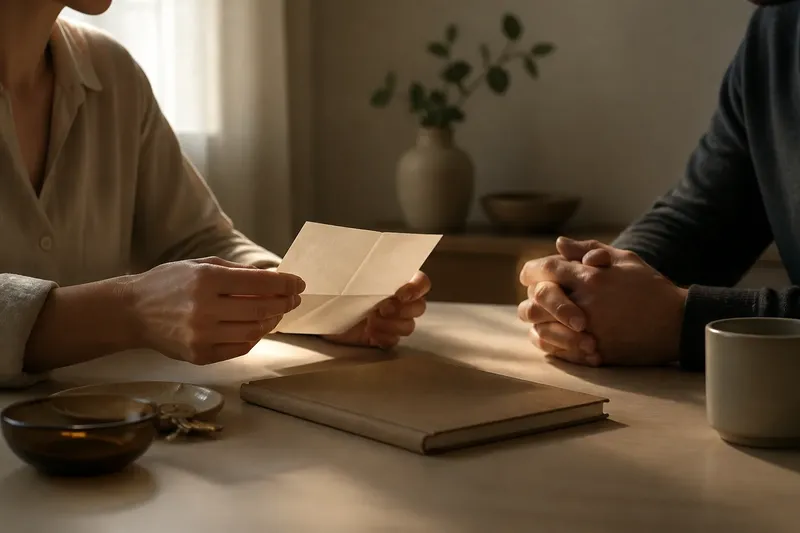
What changes in a scene when you watch the hands instead of the faces? A rewatch focused on hands can make a familiar film feel newly precise: a character reaches, hesitates, hides an object, or stops touching something, and the scene’s attention shifts with that small action.
Choose a film you know well, then watch it once without pausing. Follow the hands as visible behavior, not as a code to decipher. Note what they do, what they touch, and when your attention leaves them. The useful question is not “What does this gesture always mean?” but “What does this action do here?”
Let the first viewing stay unmarked
On the first pass, resist the urge to build a theory. Notice the broad pattern: whose hands draw your eye, which objects move between people, and whether a gesture begins before or after a line of dialogue. You can jot down a few scene locations or timestamps for later, but there is no need to record every movement.
Pay attention to the film’s ordinary rhythm. A hand may rest on a table through a conversation, then become noticeable when it shifts. Another may stay outside the frame while a character speaks. Those absences and continuities can matter as much as a dramatic gesture.
Keep your notes descriptive. “She closes the book while he keeps talking” gives you something observable to revisit. “She rejects his authority” is already an interpretation. You may eventually find that reading persuasive, but it should grow from what the scene presents rather than replace it.
Track what a gesture changes
A gesture becomes easier to read when you ask what changes around it. Does a character start, interrupt, or end an action? Does another person respond? Does the edit move to a face, an object, or a different part of the room? This keeps attention on the scene’s construction rather than on a dictionary of supposed hand meanings.
- Beginning: Note what prompts the action. A reach might follow a question, a glance, or a pause.
- Interruption: Watch for a hand that stops short, withdraws, or changes direction. The interruption can make the attempted action more prominent than a completed one.
- Contact: Record whether the character touches a person, a prop, a surface, or nothing at all.
- Response: Notice if another character looks, moves, speaks, or continues as before.
- Aftermath: See whether the object changes hands, remains where it was, or disappears from attention.
These observations do not dictate one explanation. A hand hovering over a glass could suggest reluctance, concentration, distraction, or simple timing. The surrounding action helps distinguish possibilities, while leaving room for uncertainty.
Follow objects through the hands
Props give gestures a practical shape. Choose one object that recurs, such as a key, cup, letter, phone, or tool. Trace who holds it, who offers it, and whether anyone avoids touching it. Keep the record tied to visible action: “He folds the note and puts it away” is clearer than “He buries the truth.”
Look at how an object is handled, not just who possesses it. Is it gripped, passed carefully, pushed aside, turned over, or left untouched? Does a character use it while speaking, or only after the conversation ends? The handling can set a scene’s pace and direct attention, even when the object has no special plot significance.
Notice transfers in relation to the cut. A prop may pass between hands in one shot, or a cut may leave the transfer unseen. In either case, ask what the edit makes easy to follow and what it withholds. Avoid assuming that a close view makes an object a clue; the scene may simply need the viewer to understand where it is.
Say you choose a family drama with a letter that appears in several scenes. On a second viewing, you note that one character holds it flat while another folds it, and that the conversation continues during both actions. You might observe that the handling differentiates the characters’ approaches to the letter. You do not have to decide that one gesture reveals a secret or predicts a later event.
Notice where attention moves
Hands compete with faces, dialogue, movement, and sound. Watch for moments when the film makes a hand newly visible: a person leans into the light, an object enters the frame, or the camera holds on an action after a line finishes. Also notice when a sound draws attention away from the movement, such as a knock, a ringing phone, or another character’s voice.
Editing shapes the hand’s place in a scene. A cut from a speaker to a listener’s fingers may shift emphasis from the spoken words to the response. A longer shot may let a small movement happen within the same shared space as the conversation. Neither choice has one fixed effect; ask what you were prompted to watch and what information the shot provides.
Sound can make an action legible without turning it into a symbol. A paper rustle, a cup set down, or a latch clicking may stand out because the soundtrack gives it space. Check whether you noticed the action before hearing it, because of the sound, or only after the edit showed its result. That sequence can reveal how the film directs attention.
What should you ask on a hands-focused rewatch?
Should you watch the whole film or choose a scene?
Watch the whole film if you want to follow a recurring gesture or object across changing situations. Choose a scene if you want to study timing, blocking, and editing without filling pages of notes.
Do hands always reveal what a character feels?
No. A visible action may be deliberate, habitual, practical, or difficult to interpret. Treat emotion as one possible reading and compare it with the character’s words, the other person’s response, and the scene’s context.
How should you note a gesture you cannot interpret?
Describe its shape and timing: “She taps the box twice, then pulls her hand away.” Mark your interpretation as a question if you want to return to it, rather than turning a guess into a fact.
What if a character’s hands are often offscreen?
Record when they disappear and what remains visible or audible. The absence may limit what you can know, or direct attention toward faces, dialogue, and other parts of the scene; do not fill in unseen actions as though you watched them.
Keep interpretation close to the screen
For a useful set of field notes, separate observation from inference. A two-column page works well: put actions and edits on the left, then possible readings on the right. Keep the second column tentative. If several interpretations fit, leave them side by side instead of forcing a verdict.
Revisit only the moments that raise a clear question. A laptop’s standard playback controls are enough to pause and replay a passage; use the timeline to return to the same scene rather than letting repeated viewing blur your memory of its order. Watch the full passage again after examining a brief moment, so the gesture can return to its conversational and visual context.
Do not treat a hand as an isolated symbol. A clenched fist, open palm, or withdrawn touch can mean different things in different scenes, and the same character may use the same movement for practical reasons. Compare the action with the character’s immediate aim, the object’s use, the other person’s response, and the way the scene is cut. If the evidence remains mixed, “unclear” is a precise note.
Use the rewatch to sharpen your next viewing
A hands-focused rewatch is most rewarding when it gives you a sharper account of how a scene guides attention. You may notice that a prop changes hands before anyone comments on it, that a pause is carried by an unfinished reach, or that the soundtrack makes a small action easier to catch. These are descriptions of the film’s choices, not claims that every movement hides a message.
Keep your notes brief enough to use later: name the scene, record the action, note the edit or sound that drew your eye, and write down one question. The phrase “rewatch focused on hands” is a useful search starting point, but the film itself should decide what you track next. On another viewing, follow a recurring object, a listener’s reactions, or the way dialogue overlaps with movement—and let the details earn their meaning.