The Background Is Not a Treasure Map
Learn how to read movie backgrounds without treating every object as a clue, and distinguish deliberate emphasis from decoration with a clear viewing method.
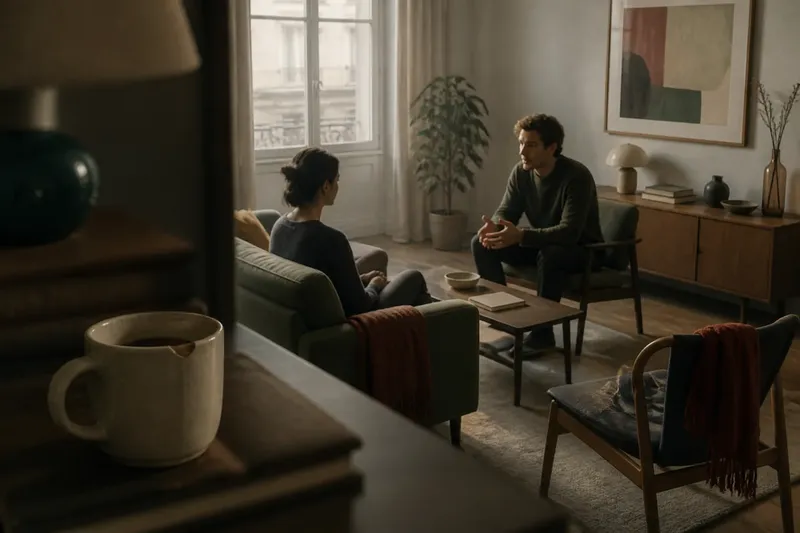
When a scene places a chipped mug beside a character, it is tempting to ask what the mug means. A better first question is whether the film asks you to notice it at all. Reading movie backgrounds well means separating emphasis from decoration without turning every shelf into a puzzle.
1. Start with the scene’s immediate job
Before assigning meaning to a background object, identify what the scene is doing. Is a character trying to persuade someone, avoid a question, or wait for news? That action gives you a useful baseline: an object matters when the film makes it relevant to the scene’s attention, mood, or information.
Look at what occupies the clearest part of the frame. A face in focus, a moving figure, or a prominent gesture usually carries more immediate weight than a small object behind it. This does not make the background meaningless. It simply keeps interpretation anchored to the scene rather than to a hunt for hidden symbols.
2. Notice how the frame directs your eye
Composition can emphasize an object without making it a plot clue. A bright lamp against a dark wall, a sharp shape among soft furnishings, or an object placed near a character’s eyeline may attract attention because it helps organize the image. Ask whether the visual emphasis is strong, then ask what that emphasis does.
Emphasis can clarify space, balance a crowded frame, or echo the scene’s emotional tone. A carefully centered vase might give a formal room a rigid feel. That visual effect can be intentional even if the vase never affects the plot. Treat “the film wants me to see this” and “this object predicts a later event” as separate claims.
3. Watch for a change, not just a presence
An object becomes more suggestive when its presentation changes. It may be moved, handled, revealed after being obscured, or shown in a closer shot. A background detail that appears once and stays in the same place may simply belong to the room’s visual design.
Compare the object’s treatment across the scene. Does the camera return to it? Does a character react to it? Does its position change in a way the scene makes legible? These cues support a stronger reading than mere presence. Even then, they indicate attention, not necessarily a secret that the viewer must decode.
4. Separate character attention from viewer attention
A film can show viewers something that the characters ignore, or it can place a meaningful object in the room without anyone acknowledging it. Those are different choices. Notice whether a glance, touch, pause, or line of dialogue connects a character to the object.
If no character responds, that does not rule out meaning. But it should make you cautious about saying the object is important to the character’s immediate decision. The film may be using it to create atmosphere or visual contrast instead. Keep those possibilities open until the scene gives you a clearer reason to choose.
5. Check whether the detail earns a second appearance
Repetition can strengthen an interpretation, especially when the film changes the way it presents a detail. A recurring object might gather meaning through context: the first appearance establishes it, while a later appearance connects it to a changed relationship or situation.
Still, repetition alone is not proof of a hidden message. A set may keep the same furniture across several scenes because the story remains in the same room. Look for variation in framing, sound, action, or reaction. A return that changes the audience’s understanding carries more weight than a repeated glimpse that serves continuity.
6. Use the scene’s sound and editing as evidence
Attention is shaped by more than what sits in the frame. A cut to an object, a pause in dialogue, or a distinct sound can single it out. Conversely, a crowded background may remain visually present while the edit and soundtrack keep your focus on the conversation.
Ask what happens at the moment you notice the object. Does the cut invite inspection? Does a sound seem tied to it? Or did you spot it while scanning the image after the important action had passed? The answer helps distinguish an intentional cue from a detail that is simply available to a curious viewer.
7. Keep several explanations in play
Do not force a single interpretation when the scene supports more than one. An empty chair might suggest absence, provide visual balance, or simply belong to the room. The useful question is not “What is the secret meaning?” but “Which reading best fits the film’s visible and audible choices?”
Say you notice a red scarf on a chair during a tense conversation. Imagine that the camera never isolates it, neither character looks toward it, and it remains in place while the argument changes direction. A measured reading would treat the scarf as part of the room’s color and texture, while leaving open the possibility that later scenes may give it new weight.
Questions to ask before calling an object a clue?
Does a background object have to affect the plot to matter?
No. It can shape mood, establish a character’s surroundings, or balance the composition without changing what happens. Plot significance is only one kind of meaning.
What if I notice a detail before the film draws attention to it?
Keep the observation, but hold the interpretation lightly. Check whether framing, performance, editing, or sound later makes the detail relevant.
Can an object be decoration and emphasis at the same time?
Yes. A striking object can enrich the image while also guiding the eye. That visual role does not automatically make it a clue about future events.
How should I discuss an ambiguous background detail?
Describe what the film does before stating what you think it means. “The camera returns to the clock as the character hesitates” is more precise than declaring that the clock symbolizes fate.
Make the claim fit the evidence
When you interpret a movie background, use the smallest claim the scene supports. Start with what is visible, note how the film directs attention, and distinguish that attention from a confirmed plot connection. This approach leaves room for discovery without turning every lamp, book, or coat into a coded message.
The background is part of the storytelling, but it also has practical work to do: it gives a scene a place, a texture, and a visual rhythm. Read it closely, then let the film earn any larger claim. That restraint makes the details that truly matter easier to recognize.