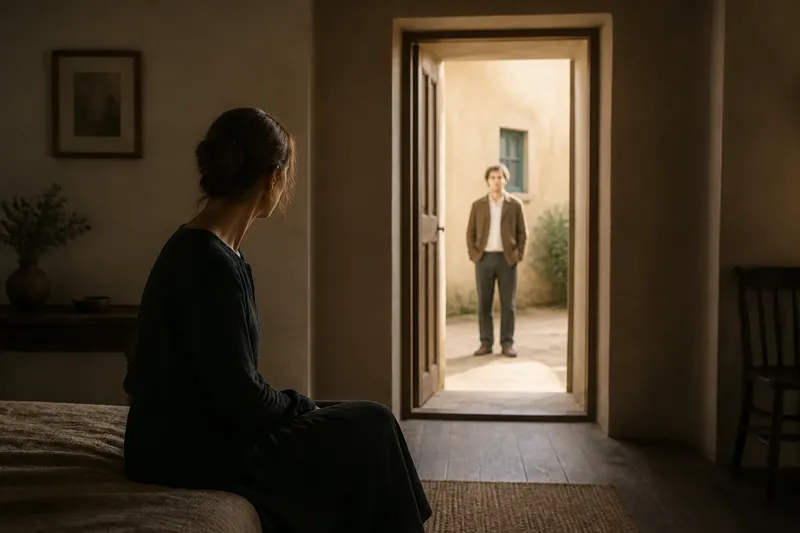
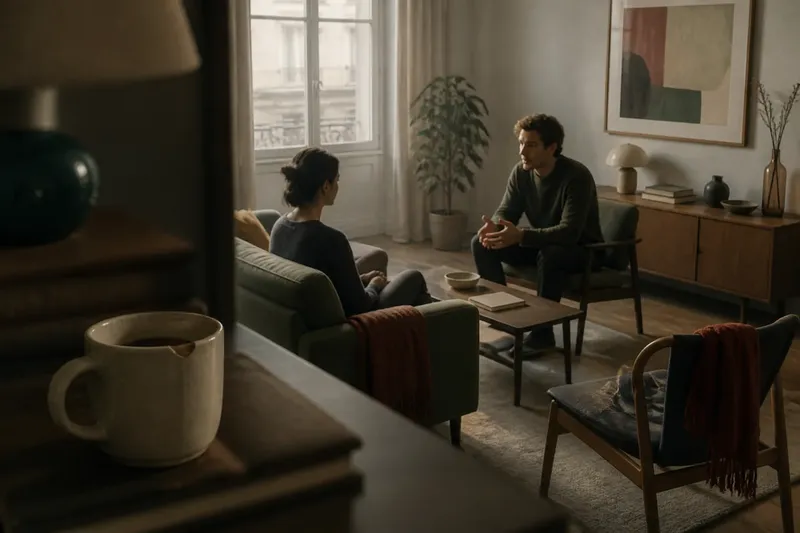
Built for the Camera or Found on Location?
Compare constructed film sets with real locations to choose the space that gives your scene the right control, texture, and room to move.
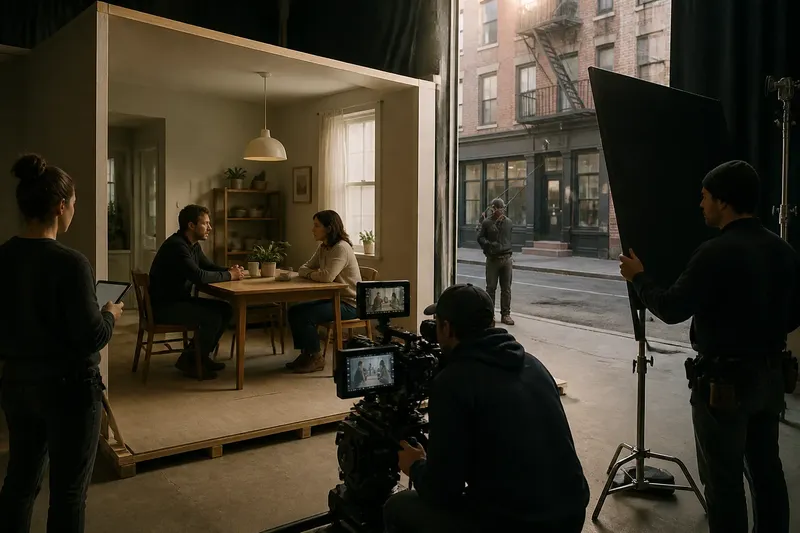
Should you build a film set or shoot on location? The choice changes more than the background: it affects where actors can move, what the camera can reveal, and how much visual detail the crew can control. Start with the scene’s spatial needs, then decide which kind of space can serve them without calling attention to itself.
Choose the space that supports the scene’s action
A location is not simply a setting. It is a working space that shapes blocking, camera placement, sound, and the movement of the crew. A narrow apartment hallway may make a character’s retreat feel trapped. A broad, empty warehouse may make the same person seem exposed. Before comparing a real place with a constructed set, describe what the scene needs the space to do.
Write down the essential actions: where a character enters, what they touch, where they stop, and what the audience must see. Then note what the scene needs to conceal. A conversation might depend on a clear view across a kitchen table, while a confrontation may need a corner that allows one person to remain hidden from the other.
These details reveal whether a space must merely look right or must behave in a particular way. A real room can supply convincing wear and practical depth. A set can be arranged around the required movement and camera angle. Neither option is automatically more authentic. The useful question is whether the space makes the action legible and believable.
A constructed set makes visual control part of the design
A set gives the production the chance to shape the room around the camera. Walls can be placed to preserve a view into another area, furniture can be positioned for a planned move, and windows can be built where the composition needs them. The crew can also choose which surfaces look old, polished, crowded, or spare, instead of accepting every detail a real room brings along.
That control is especially useful when the camera needs to move through a space in a way ordinary architecture would not allow. A wall may need to open, a doorway may need extra width, or a ceiling may need to disappear for a camera position. A set can accommodate those requirements while preserving the impression of a complete room within the shot.
Control also creates work. The production must supply the details that make the space feel inhabited: door hardware, window treatments, edge wear, objects on shelves, and the transition between one surface and another. If every item looks freshly placed, the room can feel like a display. The art department needs a clear visual logic for what belongs there and why.
Lighting is another reason to build. A constructed window can be positioned to suit the composition, and practical lamps can be placed where the camera can see them without obstructing the scene. That does not remove every constraint; it lets the crew decide which constraints to keep. A set is a strong choice when the scene relies on repeatable access, precise framing, or a space that does not exist in a usable form.
A real location brings texture and conditions you cannot fully stage
A location carries small signs of ordinary use: a scuffed threshold, an uneven patch of paint, a view across a neighboring roof. Those details can give a scene a sense of place without requiring the art department to invent each one. A real staircase also has its own proportions and rhythm, which actors can respond to as they move through it.
The same particulars can limit the scene. A room may not have space for the desired camera position, or the strongest available angle may include a distracting sign, mirror, or bright window. Noise, changing daylight, public access, and the needs of the property can also affect what the crew can capture. A location’s character comes with conditions attached.
Scout for the shot, not only for the room. Stand where the camera might go. Look through the lens or a frame guide if available, and check what appears beyond the actors. Notice where sunlight falls, which surfaces reflect light, and whether a doorway lets people or equipment pass without crossing the composition. A place that looks excellent to a visitor can be awkward from the camera’s position.
Locations suit scenes whose identity depends on a particular environment, or whose visual texture would be difficult to reproduce convincingly. They can also work well when actors benefit from interacting with a space that already has a coherent layout. The tradeoff is reduced control: the production may need to adapt the blocking and framing to the place rather than reshape the place around them.
Use a hybrid space when the scene needs both kinds of control
A production does not have to choose between an untouched location and a complete set. It can dress a real room, build a partial interior, or combine location exteriors with a constructed interior. A street façade might provide authentic daylight and surrounding architecture, while a studio room lets the camera see through a removable wall.
This approach is useful when one visual element matters more than the rest. A real storefront might provide the correct neighborhood feel, while a set reproduces only the counter and entrance needed for close coverage. Or a location room can supply its windows and floor, with selected walls rebuilt to allow a camera to pass. The choice is not simply about realism; it is about deciding which parts of the space need to be real and which need to be adjustable.
Hybrid work needs continuity between the pieces. Match the direction of light, the height and finish of visible surfaces, and the way sound carries across the cut. If the exterior suggests a deep room but the interior set feels cramped, the transition may make the geography confusing. Make a simple overhead sketch showing doors, windows, actor paths, and camera positions before committing to the split.
What should you ask before choosing a film space?
When does a constructed set make more sense than a location?
Choose a set when the scene needs camera access, wall placement, or repeated control that a real room cannot provide. It is also useful when visual details must stay consistent across coverage or the space needs a designed feature that is hard to find intact.
When is a real location the stronger choice?
A location is a good fit when its distinctive layout, surrounding environment, or existing wear contributes directly to the scene. It can also suit a production that is willing to adapt its framing and blocking to the space it finds.
Can one scene use both a location and a set?
Yes. A production can use a real exterior and a constructed interior, or dress and modify a location to gain selected camera access. Plan the visible connections carefully so the audience can understand that the spaces belong together.
What should a location scout check beyond appearance?
Check the camera’s likely positions, actor routes, available light, reflections, sound interruptions, and access for the crew. Also look at what enters the frame from doors and windows, since those edges often reveal unwanted details.
Make the choice by comparing the scene’s nonnegotiables
Put the options side by side against a short set of questions. Which movements must fit? What visual detail cannot change? Does the camera need to cross a wall or hold a view through several rooms? Is a particular real-world feature central to the story? Which environmental conditions can the production accommodate?
Give each requirement a clear priority. A scene may need a specific exterior view but only a generic interior, or it may depend on a precisely placed window while the surrounding neighborhood is irrelevant. This separates the qualities that a location must provide from those a set can create. If no single option covers every need, identify the most important element and consider a hybrid.
Say you are planning an invented scene in which a courier enters a small repair shop, places a package on the counter, and watches the owner react. If the story depends on a recognizable neighborhood visible through the front window, a real storefront may supply the strongest exterior texture. If the camera also needs a clear view from the counter to the door, but the shop’s walls block that angle, a partial set or rebuilt interior could preserve the street-facing view while opening the room for the shot. The expected observable result is a readable entrance and reaction without losing the sense of place.
Before settling on a space, sketch the scene’s action and draw the camera’s view from each planned position. Mark what the audience must notice and what should stay out of sight. Then compare the real location, a constructed set, and any sensible hybrid against those marks. For a location, confirm access and permissions with the property owner and follow applicable local requirements; where construction or technical work is involved, consult the appropriate qualified professionals.
Choose the space that makes the scene’s important relationships easiest to see: who can reach whom, what a character notices, and what the frame withholds. A room should not compete with the action merely because it is impressive or convenient. When the space supports the intended movement and attention, the audience can read the scene rather than admire the production’s solution.